The Hospital Management System that runs your whole hospital
One patient record across your OPD, IPD, pharmacy, diagnostics and GST billing. Ask it a question, speak your notes, open an X-ray — without leaving the screen.
Not ready for a call? Start a 7-day trial and run it on your own workflows first.
What you won't get from typical HMS software
Five things that change how the day actually runs — at the front desk, in the consulting room and in radiology.
Ask Ira about your day
How many are waiting? Any beds free? What did we collect today? Ask in plain words and the answer comes from your own hospital's records, with a link to the screen it came from. Ira only reads. It never changes anything.
Meet IraSmart EMR: speak the note, not the keyboard
Dictate during the consultation and Smart EMR proposes values for the form's own fields. They arrive as a dictated draft the doctor reviews field by field, and reach the record only when the doctor presses Save EMR.
See Smart EMRReception stops being asked how long
The queue goes up on the TV in your waiting area — any TV, nothing to install. Patients can see where they are in the line, so the front desk gets on with its work.
See the waiting screenX-rays open on the screen in front of you
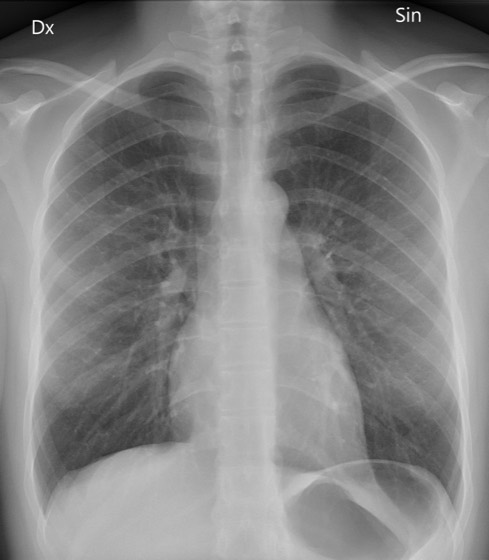
Zoom in, move around, rotate, brighten, change the contrast, invert it. Nothing to install on whichever computer the doctor is sitting at.
See imagingScans come straight from your machines
Your X-ray, CT and MRI machines send the scan into the patient's file themselves — nothing to carry on a CD. A scan that doesn't match the order is turned away instead of being filed against the wrong patient.
See how scans arriveAnd the whole hospital underneath
All five sit on top of the departments below — the same patient, the same file, the same bill.
See every departmentOne record, every department
Nobody hunts for a file and nobody writes the same thing twice. The pharmacy sees the prescription the doctor just wrote, billing sees what was actually done, and the doctor sees all of it on the next visit.
OPD
Walk-ins register themselves from a QR code, tokens run the queue, and the bill comes out GST-ready.
IPD & OT
Admissions, who is in which bed right now, nursing charts, theatre bookings and discharge.
EMR
Consultation formats for your own specialities, clean printed prescriptions, and the patient's whole history on one screen.
Appointments
Doctor sittings and time slots, walk-ins and follow-ups in the same queue, and a record of who referred the patient.
Patients
The patient's details, every past visit, their documents and the messages you have sent them — in one place.
Pharmacy
Purchases, batch and expiry alerts before stock is wasted, rack-wise stock, and fast HSN/GST counter billing.
Diagnostics
The order the doctor raised follows the sample to the signed report, and your lab machines send their readings in themselves.
Finance & GST billing
Your rate list, the day's collection, referral payouts, and what each department actually earned.
ABHA & ABDM
ABHA numbers sit on the patient's record today. The full ABDM connection is still being built, and we tell you plainly which is which.
Pay for the departments you actually run
Start with what your hospital does today. Add the rest when you grow.
Switch on what you run
Switch on OPD, IPD, pharmacy, diagnostics, imaging or billing — whichever departments you run today — and add the rest later.
The same system at any size
A single-doctor clinic and a multi-speciality hospital run the same system, just with different departments switched on.
Staff see only their own work
Switch on a department and the people who work in it get access to it. Everyone sees only what their role allows.
Getting started. How it works.
From a solo clinic to a surgical centre, four steps to get your hospital running on it.
1. Get set up
We train your staff and put your own QR code at the front desk, so walk-ins register themselves and the queue starts running the same week.
2. Run the day on it
Vitals, consultation notes and ward rounds go in as they happen, so a note written in the consulting room is already in the ward, at the pharmacy and on the bill.
3. Everything stays in step
The moment a doctor writes an order it reaches the pharmacy and the lab, and the result comes back to the same patient file.
4. See where you stand
What you collected, who referred which patient, and where the day slowed down — on one screen, every morning.
Records your patients would be comfortable with
Your patients' records are the most sensitive thing your hospital holds. Here is what is in place today, in plain words — and what is not yet, just as plainly.
Read the whole security page- Locked when stored, locked when sent
- Records are encrypted where they sit (AES-256) and encrypted again on the way to your screen.
- Everyone sees only what their role allows
- You decide what a receptionist, a nurse, a pharmacist or a doctor can open. Role-based access is set once for your hospital and follows every staff member.
- Every change has a name against it
- Edits to a record and every money entry go into an audit trail with the staff member who made them, so a question about a number always has an answer.
- Your data stays in India
- Hospital and patient data is hosted inside India. No copies leave the country.
- We never sell or share your data
- We do not sell data, we do not let outside analytics run on your patients' records, and nobody outside your hospital gets access.
What we do not claim: we have no security certificate to show you, and we do not promise an uptime figure. We have built towards the DPDP Act 2023 and ABDM — neither of them has certified us, and we will not tell you otherwise.
The parts that are easy to miss until you switch
Privacy by design
Records encrypted where they sit and on the way to your screen, with the DPDP Act 2023 built in from the first day
Unlimited staff users
Every doctor, nurse and front-desk user included. You never pay per person
Direct support
You reach the small team that builds the product, not a ticket queue
Reports you can hand over
The day's appointments, collections and stock as a PDF or Excel file you can hand to your accountant
See it on your own hospital's day
We will walk through your OPD, your pharmacy and your billing — only the departments you actually run — and tell you plainly where the system does not go yet.
Or start a 7-day trial and run the system on your own workflows before you commit.
From the blog
DPDP Act 2023 for Hospitals and Clinics: A Practical Guide
What India's DPDP Act 2023 and the 2025 Rules mean for clinics and hospitals: consent, patient rights, breach duties, timelines — and where software helps.
EMR Software for Clinics in India: Beyond One-Size Templates
Why generic EMRs fail specialty practices, what per-specialty templates change for dental, eye and maternity clinics, and how to pick an EMR doctors will use.
Hospital Pharmacy Software: Batch, Expiry & GST Done Right
What good hospital pharmacy software covers — purchase, GRN, batch and expiry tracking, rack management, HSN/GST counter billing — and the traps to avoid.